Approach
Approach
The work of a commercial architect.
Most businesses would not build a new office without an architect, a blueprint and a plan. Yet many try to build growth without the same level of structure.
The principle
I do not become your growth engine. I build yours.
Matthew Steiner, Founder
Every engagement is designed to produce something your team can run, report on and improve independently. The goal is lasting capability, not ongoing dependency.
Not a campaign. Not a hire. A commercial system.
Most businesses approach growth through campaigns or people. Both can work. Neither builds the infrastructure that makes growth repeatable regardless of who is in the room.
What businesses typically do
- Run campaigns (activity that stops when the budget does)
- Hire BD or sales people (one person's capacity, no underlying system)
- Rely on founders (growth dependent on one or two individuals)
- Commission strategy documents (plans that describe the problem, not resolve it)
What Finch Theory builds instead
- Commercial infrastructure that operates whether or not we are in the room
- A system the whole team can run, not a person doing the work
- Growth capability that survives changes in personnel
- A working Commercial Operating System™, not a document
Finch Theory creates the commercial blueprint, then builds the infrastructure required to support sustainable growth.
Fractional. Embedded. Finite.
We work alongside your existing team, not instead of them. The engagement has a defined shape and a clear end point. The goal is not ongoing dependency. It is lasting capability.

- Alongside, not instead
- We integrate with your current team and processes. We are not a replacement for your people or your marketing. We are the layer that gives your commercial activity structure, visibility and repeatability.
- Building, not doing
- The output is infrastructure your team can run, not a service they rely on us to deliver. Every piece of work is designed to transfer knowledge and capability, not to create dependency.
- Defined and finite
- Every engagement is scoped with a clear start, structured milestones and a defined end point. There is no open-ended retainer. The work finishes when the system is built and handed over to your team.
- Left behind, not taken away
- When the engagement ends, the system stays. Your data is in your CRM. Your processes are documented. Your team is trained. The Commercial Operating System™ belongs to your business.
Five steps. One process.
Every engagement follows the same sequence. The scope of each step varies by business, but the order is consistent: identify where relationship-led opportunity already sits, build the system around it, then activate it, so business development stops depending on any one person’s memory.
-
Understand the current commercial engine
We map what already exists (relationships, data, technology and process) before changing anything.
-
Identify relationship and opportunity gaps
We find where commercial value already sits in your business but is not visible, connected or converted: new business, existing-client opportunities, referrals and introductions, and relationships that have gone quiet.
-
Design the operating model
We design the blueprint for a Commercial Operating System™ shaped to how your business actually works. For what the system contains, see The System.
-
Connect content, CRM and follow-up
We build the infrastructure that makes the model run day to day, so growth stops depending on any one person remembering to follow up, and what individuals know about their relationships becomes something the organisation can act on.
-
Measure, learn and improve
We put in place the reporting and rhythms that keep growth systematic, and keep improving it as your business changes.
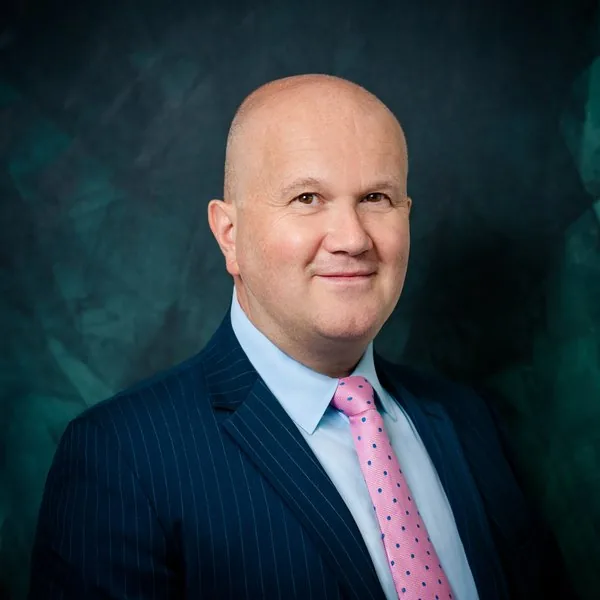
Matthew Steiner, Founder
Founder
Built from experience, not theory.
After 28 years building partnerships, distribution strategies and commercial systems, Matthew created Finch Theory to solve a problem he repeatedly saw inside successful businesses: the opportunity existed, but the structure to capture it did not. Matthew leads every engagement personally, supported by a specialist delivery team.
Finch Theory is the result. A methodology built on what actually works inside established businesses, not on frameworks invented for a textbook.
Start a conversation
Start with a conversation.
In 30 minutes, we can explore where business development is getting stuck and whether there is a useful next step.
Book a free 30-minute callNo obligation. A conversation first.